

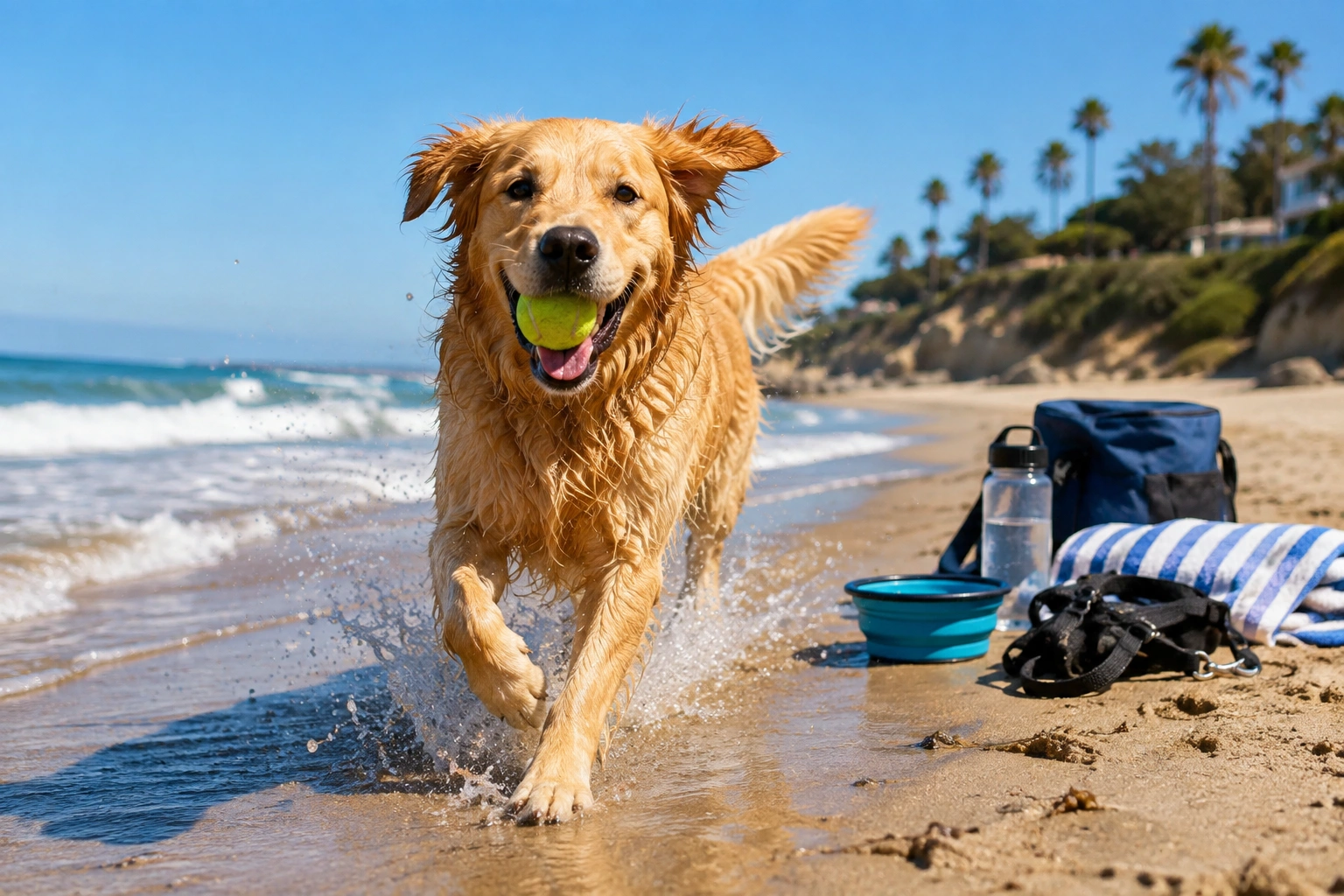
A beach trip with your dog sounds simple. Leash, water, a stretch of sand. But most dogs end up overheated, over-stimulated, or covered in sand they swallowed by accident. A few small adjustments change the whole outcome, for you and for your dog.
Table of Contents
Prep Before You Leave the House
Most bad beach days start in the car, not on the sand. Owners forget fresh water, skip sunscreen for light-coated breeds, or bring a leash that isn’t rated for saltwater corrosion. Check your gear the night before, not in the parking lot.
Pack more water than you think you need. Dogs lose fluid fast in heat and salt air, and beach water isn’t safe to drink. A collapsible bowl takes up no space and solves half the problem on its own.
If your dog’s regular collar is worn or the tags are hard to read, replace them before the trip. This is also a good moment to look into custom pet products built for outdoor conditions, like salt-resistant harnesses or ID tags that won’t fade. Gear made for the beach holds up better than gear repurposed for it.
Pick the Right Time of Day
Sand surface temperature can climb well above air temperature by mid-afternoon. Paw pads burn faster than most owners expect, especially on dark sand.
Early morning and early evening are the safest windows. The sand has cooled, the sun is lower, and your dog isn’t panting within the first ten minutes. If you only get one window, take the morning one. Dogs recover heat stress slower than people do.
Watch the Water, Not Just the Waves
Ocean water is different from a lake or pool. Currents pull harder than they look, and saltwater ingestion causes vomiting and diarrhea in dogs within a few hours. A dog that drinks seawater while playing fetch can end up sick that same night.
A few habits reduce the risk without cutting the fun short:
- Keep fetch sessions in shallow water, not past the dog’s chest
- Rinse your dog’s mouth with fresh water every 20 to 30 minutes
- Watch for signs of fatigue like slower swimming or heavy panting
- Skip the beach entirely if rip current warnings are posted
None of this requires special training. It just requires paying attention instead of scrolling on a towel.
Sand Comes With Its Own Rules
Sand isn’t just messy. It’s abrasive on paw pads over long sessions, and it packs into ear canals and between toes where moisture builds up. Left unchecked, that combination leads to hot spots and ear infections within a day or two.
A short post-beach routine prevents most of it:
- Rinse paws and belly with fresh water before the ride home
- Dry ears thoroughly, especially on floppy-eared breeds
- Check paw pads for small cuts from shells or debris
- Brush out the coat before sand dries and mats into it
This takes five minutes and saves a vet visit later.
Turn the Day Into Something You Keep
The beach itself is temporary. What you do with it afterward isn’t. A 2025 travel survey found that only 15 percent of pet owners actively look for dog-friendly beaches when planning trips, which means the ones who find a good spot rarely think to document it well.
Take photos throughout the day, not just one posed shot at the end. Dogs move fast and their best expressions happen mid-run, not on command. A few action shots next to a couple of calm, close-up ones give you real range to work with later.
Once you’re home, don’t let those photos sit in a camera roll. Turning them into photo books gives the day a physical shape you can actually hold onto, especially if beach trips become a yearly thing with the same dog. It’s a small step that makes the memory last longer than the sunburn.
Also Read : Finding the Right Personalized Dog Training Programs – Learn about hound dog breeds
Build the Habit, Not Just the Day
One good beach trip is nice. A dog that knows the routine, gear on, water breaks, rinse at the end, is what makes every trip after the first one easier. Consistency does more for a dog’s comfort than any single piece of equipment.
Start with one well-planned trip. Note what worked and what didn’t. Adjust gear, timing, or route next time. That’s how a single decent beach day turns into a pattern your dog actually looks forward to.
The same approach works for every outdoor adventure. When preparation becomes routine, you spend less time solving problems and more time enjoying the experience. Your dog benefits from that predictability too, making each new beach visit feel familiar rather than overwhelming.

